
A grace-filled Roman Feast of the Martyrs John and Paul, and Byzantine Feast of Venetable David of Thessalonica, y'all!
One thing that an unquestioned narrative or unquestioned consensus does is that it blinds us to what would otherwise be obvious. (If they are solidly based on reality THEN they lead us to the Truth.)
I'm an avid drinker of raw milk. According to the consensus out there, I'm risking brucellosis and/or listeria (BTW, cute names for kittens!) for committing this heinous act. I've been drinking this noxious liquid enthusiastically and in great abundance for several years now with no disease in sight; in fact, my relatively few seasonal allergies have all but disappeared, and I'm feeling quite chipper for a sixty-something!! My personal experience and observations have revealed that the consensus is false. (Of course, my supply comes from a source that I know to be scrupulously clean.)
Along the same vein, I am a hardened, totally unrepentant criminal, with full knowledge and full consent, regarding another narrative-and-consensus-labelled offense that I've known the evil of since the intermediate grades of elementary school.
FOR SHAME, Ademar! We might have to call the police on you!! What a disedifying example you set!! What nefarious activity are you so boastful about?
I…
…y'all hold your breath now!…
…put Q-tips into my ear canal!!
[collective gasp]
They efficiently clear the canals, preventing me from swiftly becoming as deaf as a post. Multi-decade experience and observation have shown me that the not solidly based childhood advice (narrative/consensus) I was getting about not putting into my ear canal anything smaller than my elbow was pure flapdoodle.
Now let's go to Mexico’s 🇲🇽 Veracruz (True Cross) State wherein we find huge basalt heads made by the Olmec people. These heads have serious tonnage, and were emplaced far from their source quarries.
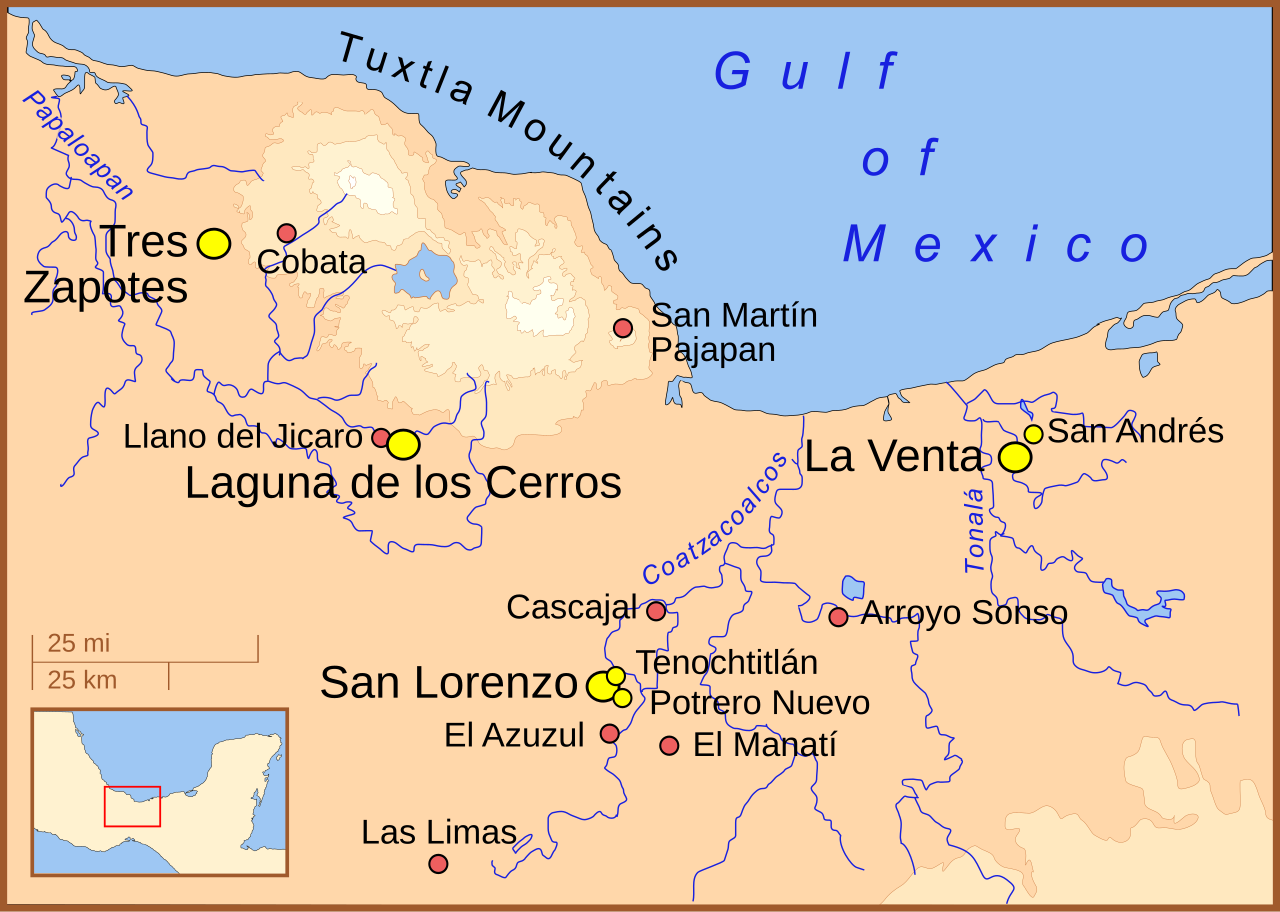
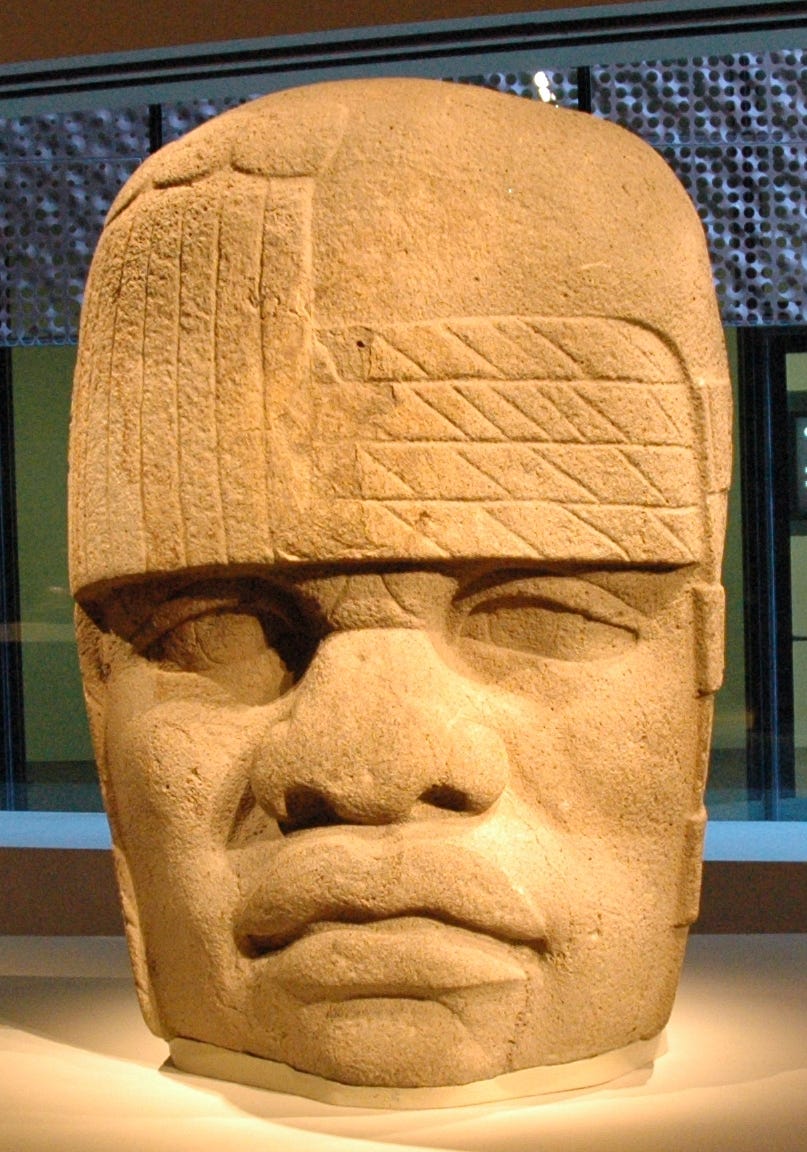
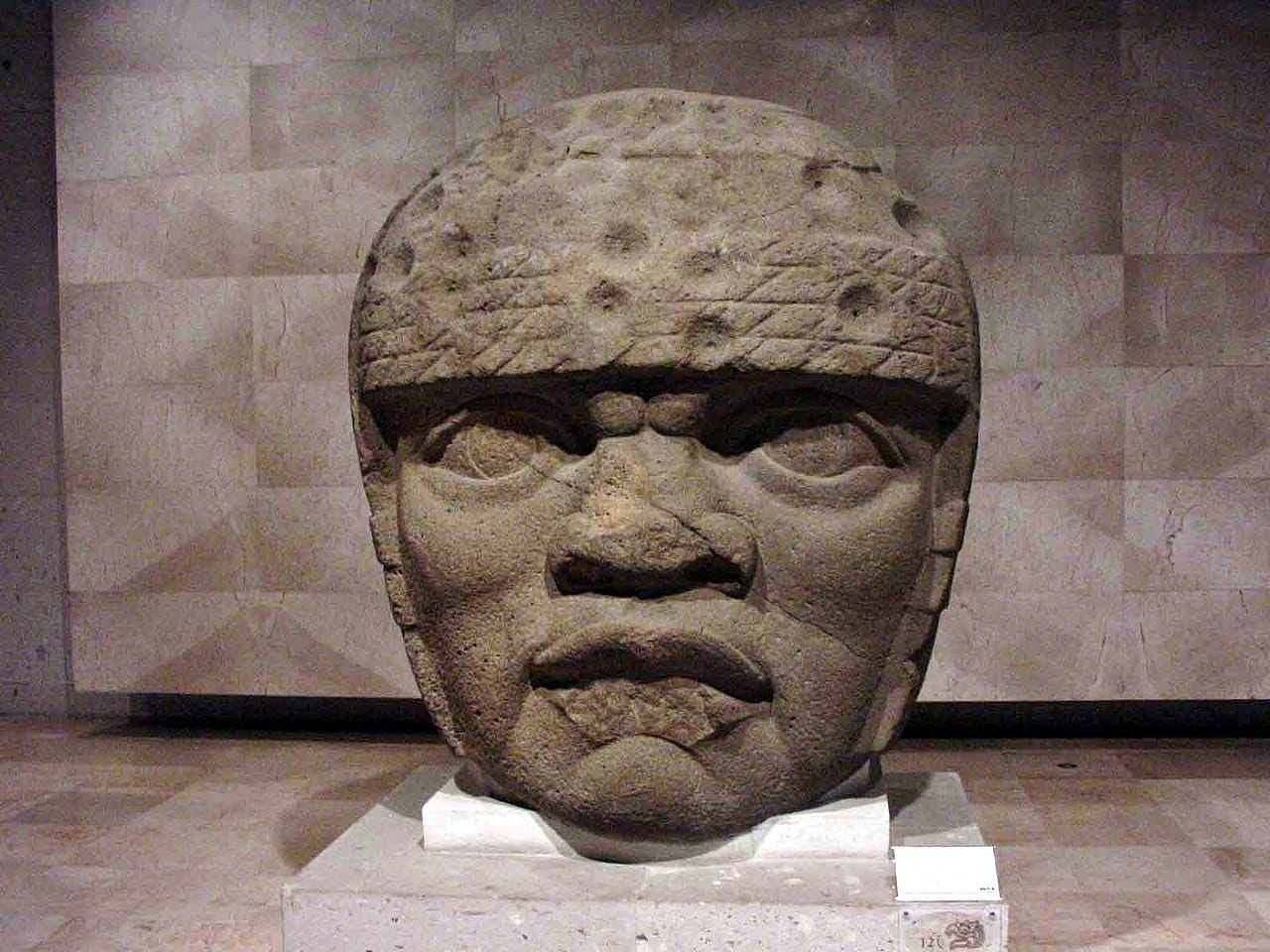
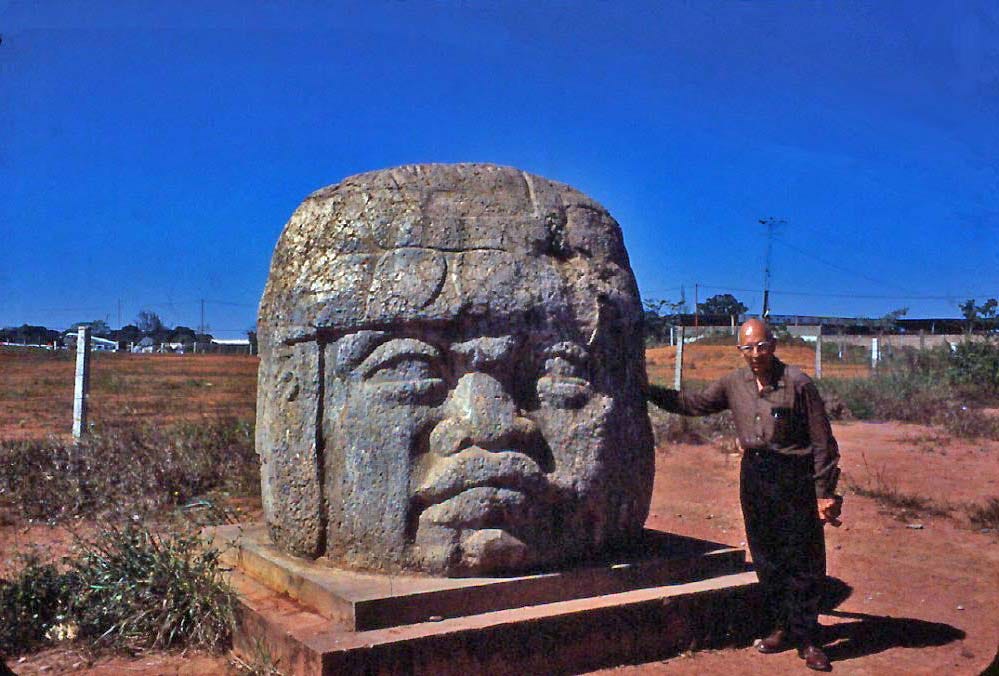
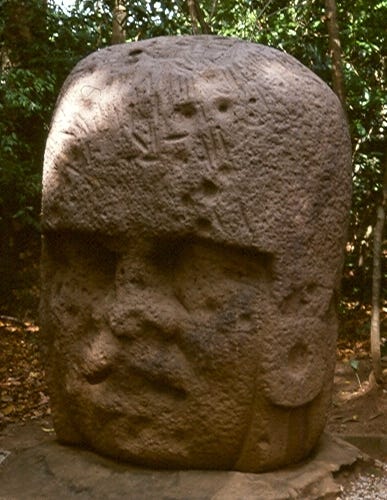
(Pic credits from first head downward: Matshall Astor at https://www.flickr.com/people/lifeontheedge/; Maribel Ponce Ixba at https://www.flickr.com/people/frida27/; Caldwell Kvaran Archive at https://en.wikipedia.org/wiki/User:Carptrash; and Michel Wal.)
If we hop across the Isthmus of Tehuantepec from Veracruz, and fly South-Southwest over the Eastern Pacific for some three thousand miles to Rapa Nui/Easter Island, we also encounter huge solidified volcanic ash (aka tuff) heads, called moai, of a different shape than in Mexico, but still of serious tonnage and most set upright a ways from their source quarries. Some even have hats!
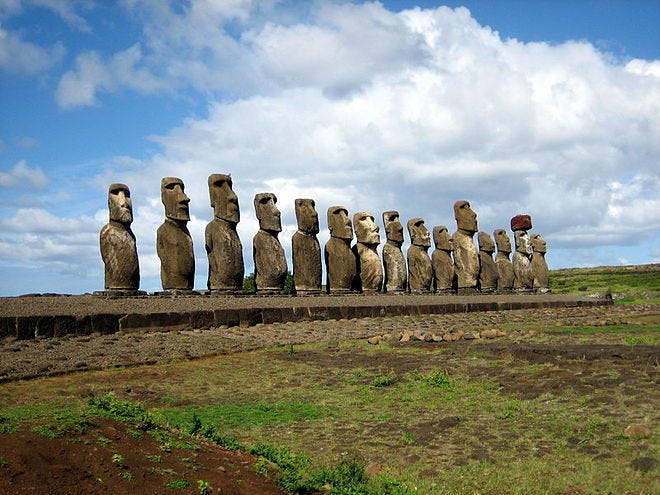
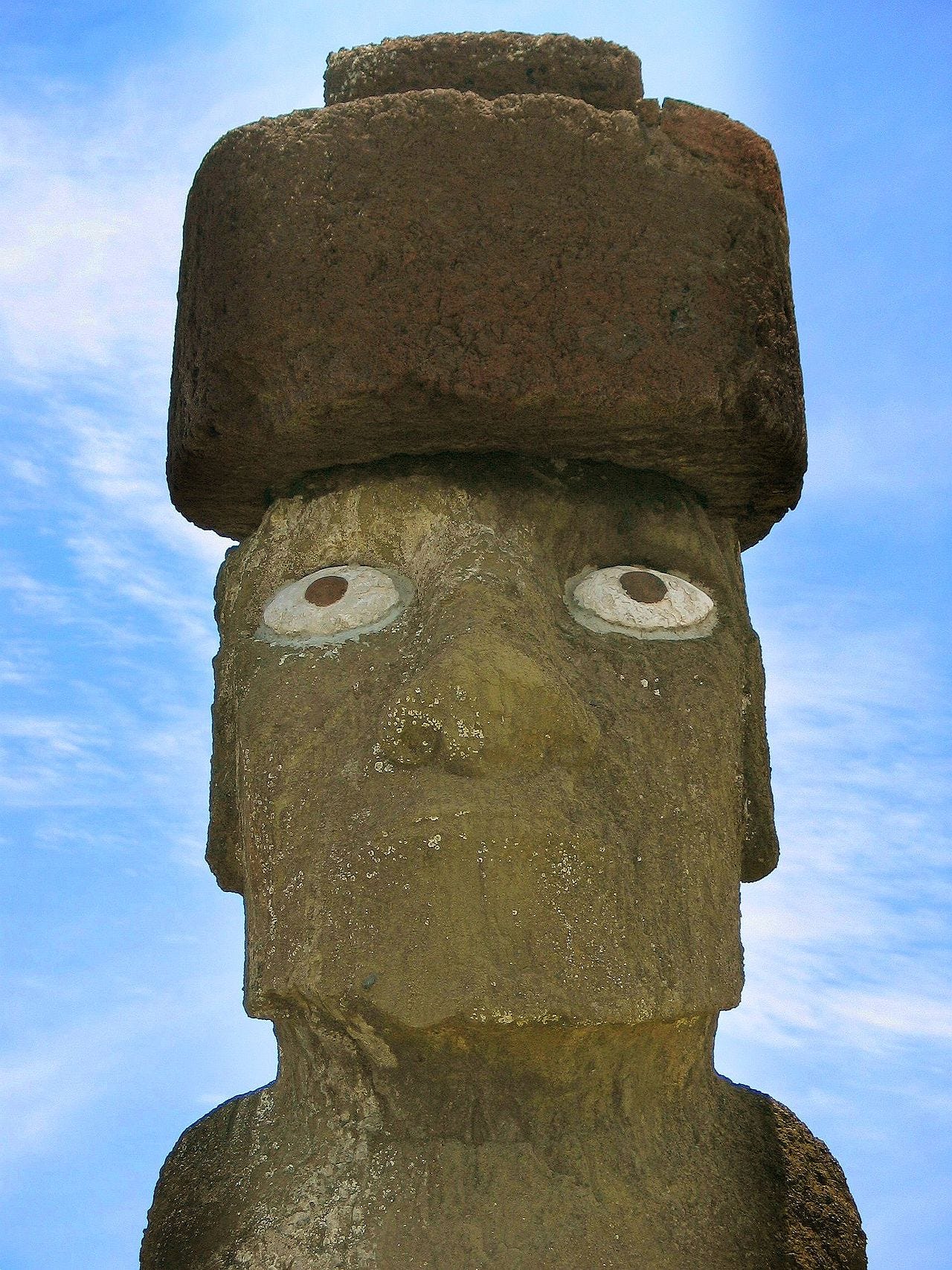
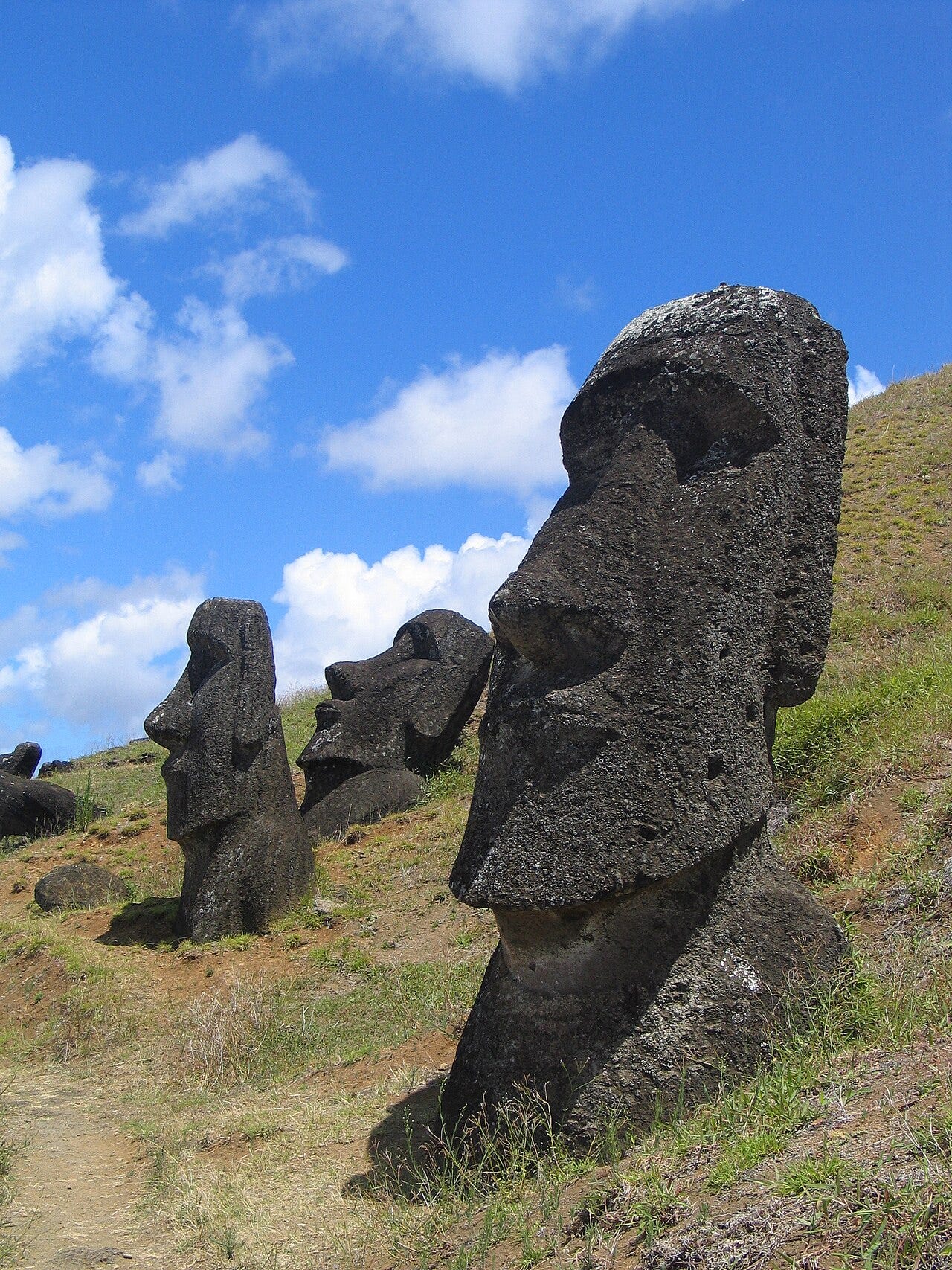
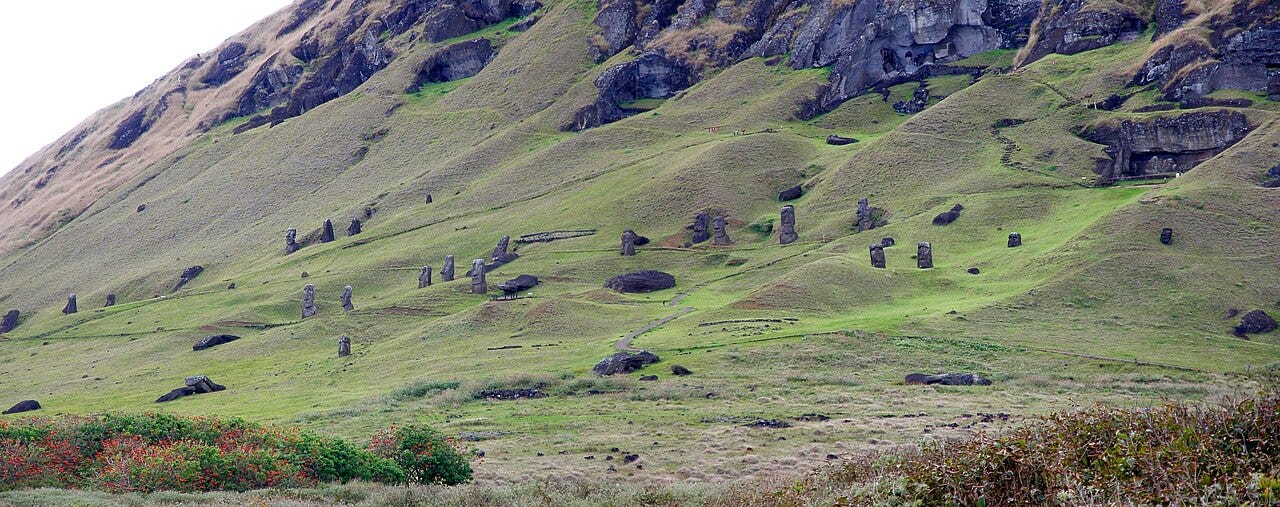
(The last photo is of the quarry that the moai rocks were taken from.)
(Pic credits top to bottom: Ian Sewell at http://ianandwendy.com/OtherTrips/SouthPacific/Easter-Island; Bjarte Sorensen at https://commons.m.wikimedia.org/wiki/User:BjarteSorensen; Aurbina at https://en.wikipedia.org/wiki/User:Aurbina; and Dropus.)
If we fly West Northwest from Easter Island, across the Pacific some five thousand miles to the Caroline Islands to the little neighboring Federated States of Micronesia (FSM) islands of Pohnpei and Kosrae, we don’t find huge basalt heads, but we DO find a small ancient city on the shore of each, both cities constructed of large, quite heavy, basalt logs.
On Pohnpei, it's called Nan Madol…
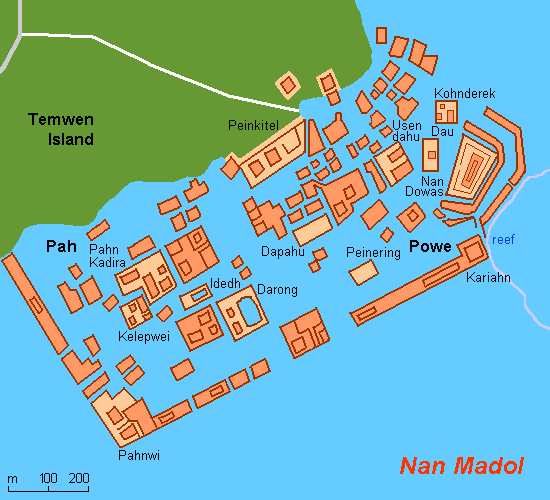
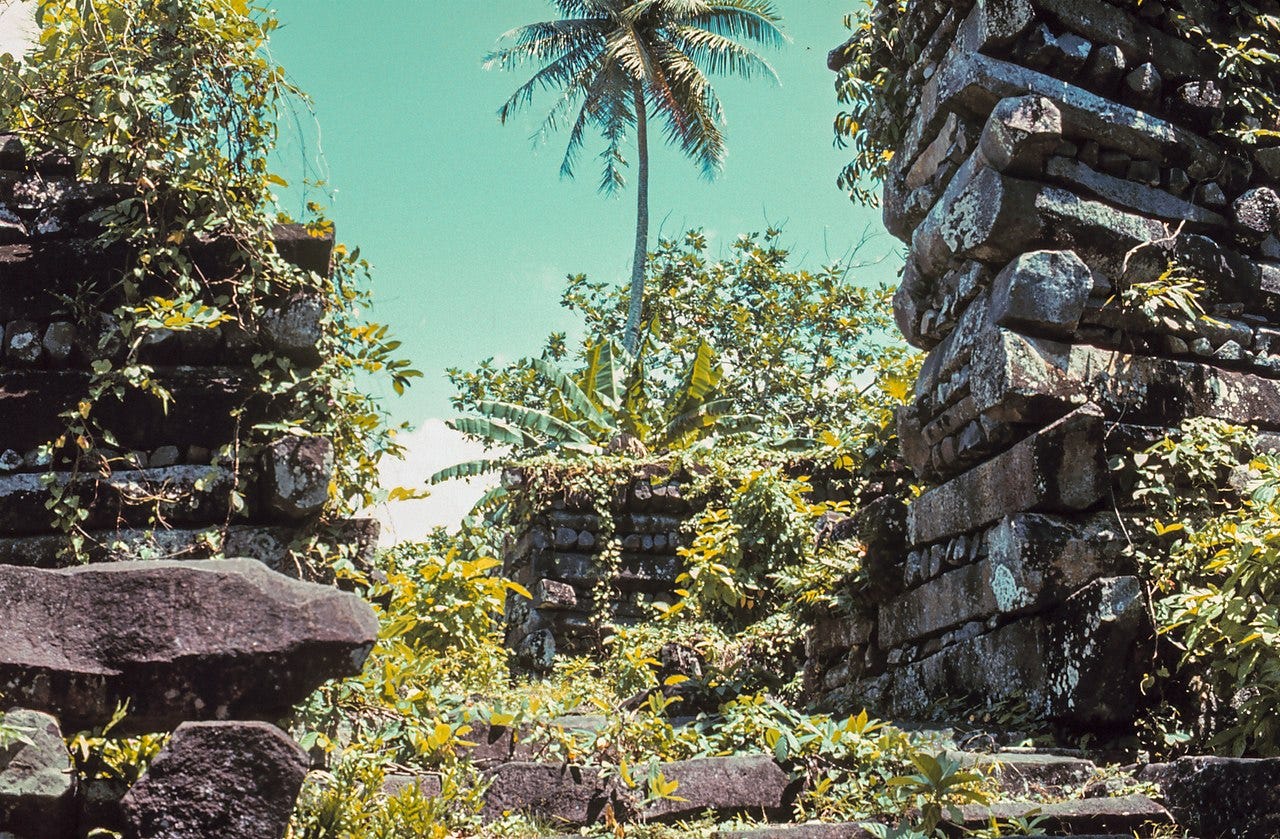
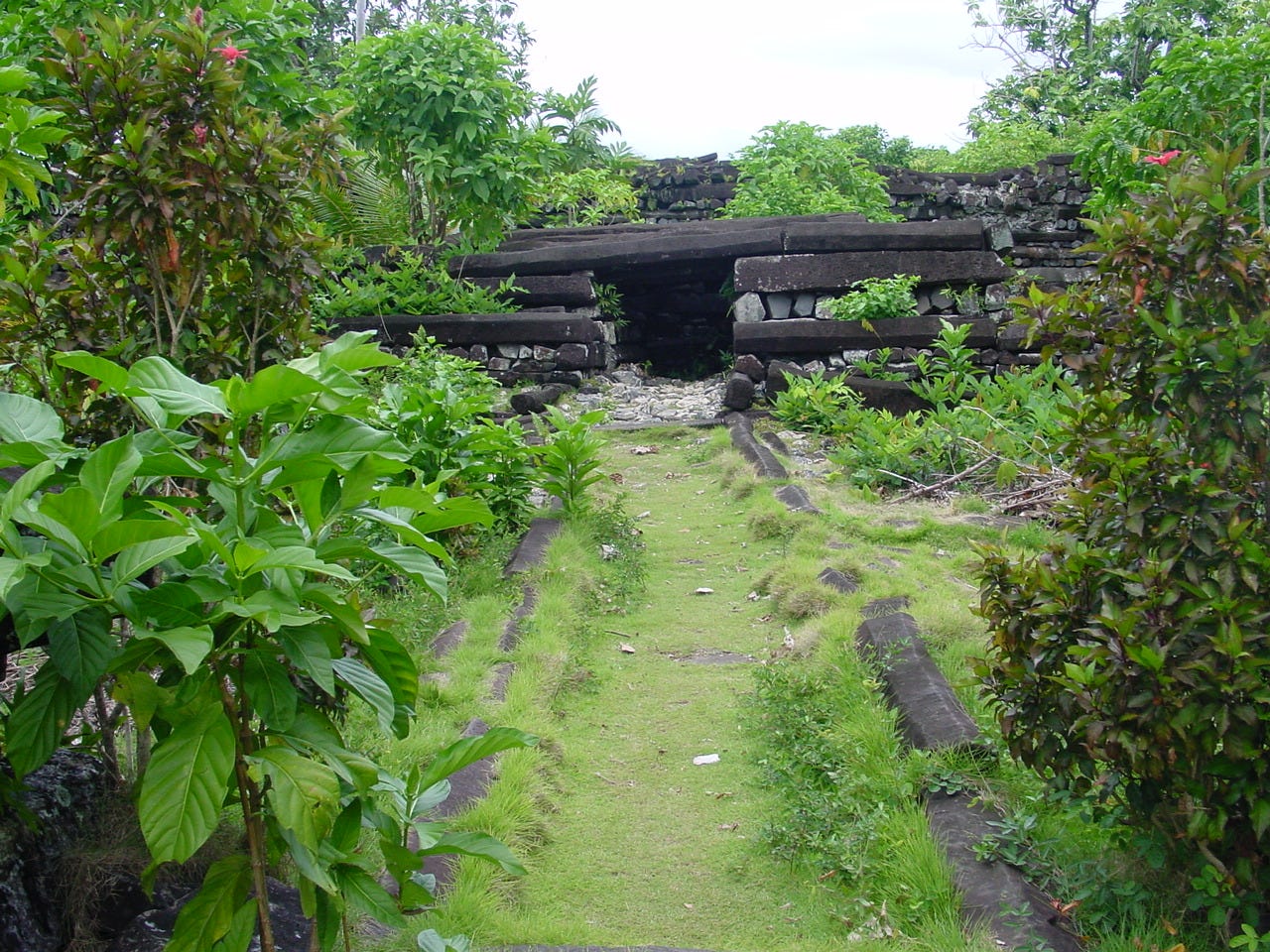
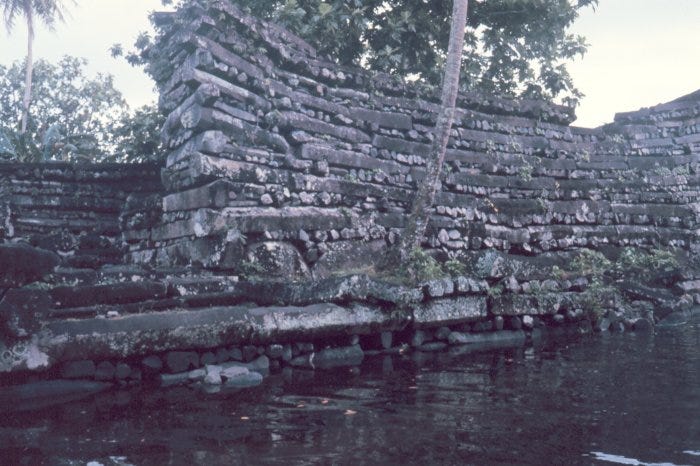
(Map and Pics credits from top: Hobe/Holger Behr at https://commons.m.wikimedia.org/wiki/User:Hobe; NOAA at http://www.photolib.noaa.gov/htmls/mvey0173.htm; CT Snow from Hsinchu, Taiwan at https://www.flickr.com/people/75391858@N00; and Dr. James P. McVey at http://www.photolib.noaa.gov/htmls/mvey0180.htm)
On Kosrae, it's called Leluh…
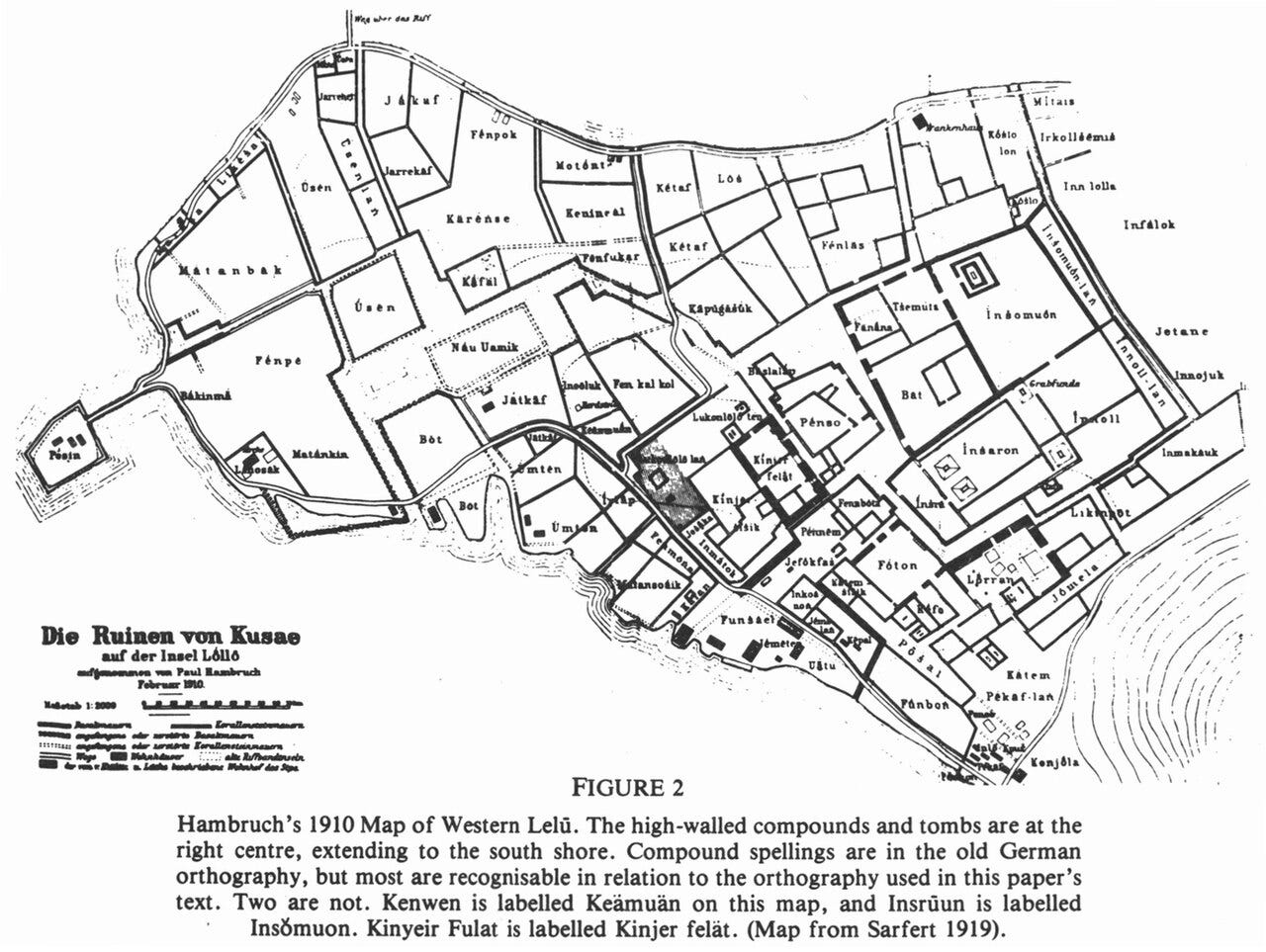
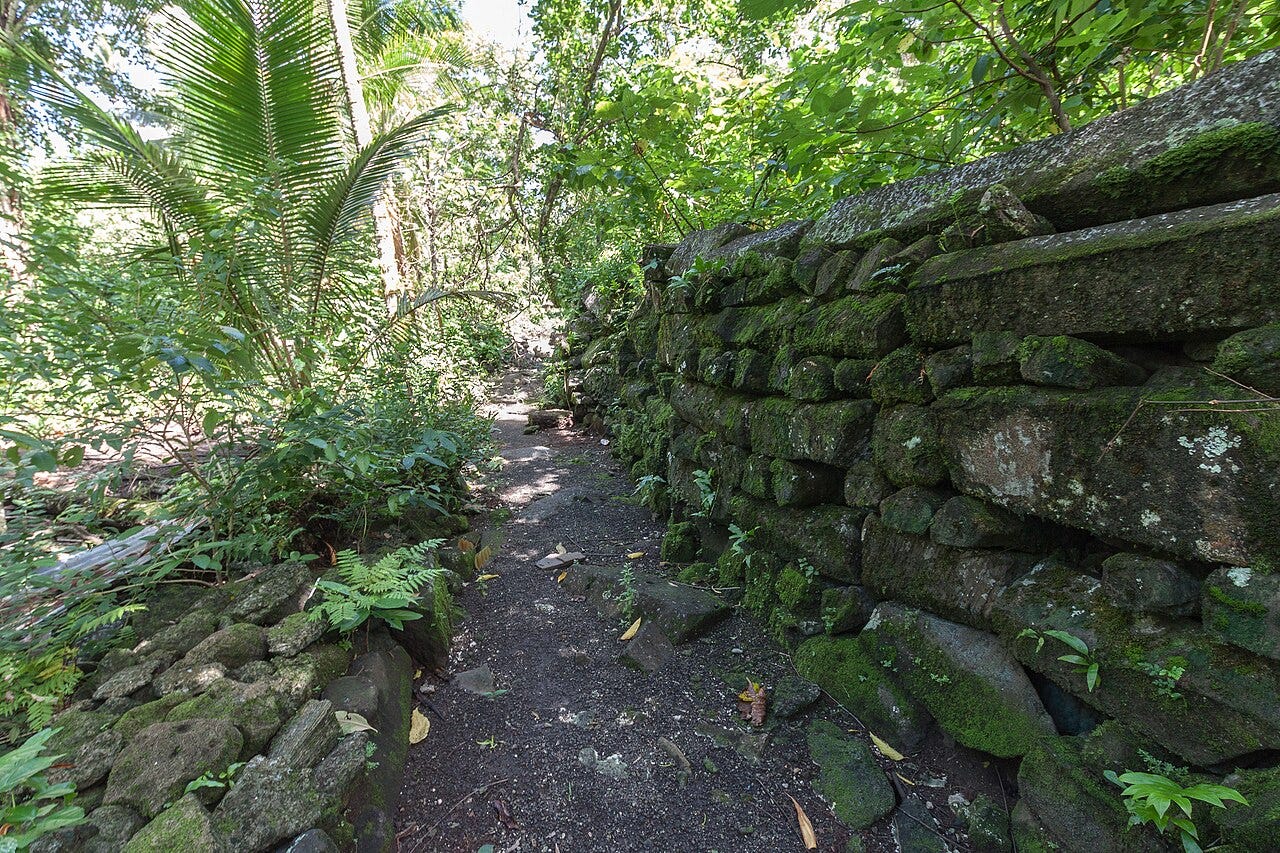
(Map and pic from top: Paul Hambruch & Ernst Safert; and Maloff 1 at https://commons.m.wikimedia.org/wiki/User:Maloff1)
(All images above are from their respective Wikipedia articles. It's easy to find data out there.)
Some archeological consensus and narratives that we grow up with are:
— Ancient peoples were generally more primitive than us in most ways, including technology. A couple of civilizations were the exception: Egypt, etc.
— They were generally isolated one from another, unless geographical neighbors.
— They used primitive tools and methods for building, sculpting, and the like.
The internet has more videos about the four places I mentioned above than you can shake a stick at. If you like rabbit holes, have at it: from amid the hubbub, you may glean some useful information.
However, there's one simple mental activity that each of us can do quite easily without relying on consensus or narrative (or videos): PATTERN RECOGNITION.
Do we see a pattern when considering Olmec basalt heads, Easter Island volcanic tuff heads and hats, and Carolinian basalt logs structures?
Do your homework (Y'all thought you could get away with none this time? 😂) and look for connections. Some suggestions:
— What's basalt? Tuff?
— When did each civilization exist, and what is the definitive historical evidence for the dates?
— Could they conceivably have had contact with one another? If so, how?
--Why did they make rather elaborate and heavy basalt or tuff items while other peoples in basalt/tuff-rich areas like the Faroe Islands 🇫🇴 or Hawai’i or Eastern Washington State did not?
— Are there other ancient groups that built or sculpted things of basalt or tuff comparable to the above-mentioned groups?
— Given the reality of the Great Flood, everyone's subsequent descent from Noah, the fallenness of human nature, and what I'd written in my First Post, how would these civilizations fit into that framework, so different from mainstream consensus and narratives?
The key thing is to make observations without preconceived notions, narratives, or consensus preventing us from making obvious connections…UNLESS those notions, narratives, etc. are based in reality!
AAAND…HAVE FUN!!! There is a LOT of fascinating yet puzzling archeological stuff out there to try to make sense of!
Our Mother of Perpetual Help, aid us!!
Ademar